
Role:
Senior UX Designer
Platform:
Desktop, mobile and app
Overview
The kitchen category on HD.com is one of the retailer’s most strategically important digital surfaces—supporting research, inspiration, and major-purchase decisions that often begin online and finish in-store. As the Senior UX Designer leading this space, my goal was to create an experience that supported every stage of the customer journey, from early research to final purchase, across both online and physical stores.
While the store experience focused heavily on in-person consultations, design services, and custom cabinetry, the online experience offered a different assortment (primarily prefab cabinets) and served customers who were often just starting to explore the idea of a renovation. The challenge was creating a digital flow that informed, inspired, and guided users—without overwhelming them or pushing them before they were ready.
The Core Challenge
Most visitors to the online kitchen category were not ready to buy. They were researching. But the site had been built with a transaction-first mindset, which caused friction at the earliest stage of the journey.
Three major problems surfaced:
-
The category structure (L1, L2, and 101 pages) was fragmented, making it difficult to navigate the full assortment.
-
Customers struggled to understand differences between online prefab cabinets and in-store custom cabinet services.
-
Many users had no idea Home Depot even offered free kitchen design services, available via phone, chat, or in store.
The result:
Customers entered the kitchen category excited—but quickly became overwhelmed or confused.
We needed to realign the UX around education, orientation, and decision support, not just product selection.
Our Approach: Educate First, Guide Always
We reframed the kitchen category around a simple idea:
If customers understand the process, they’re far more confident shopping the category.
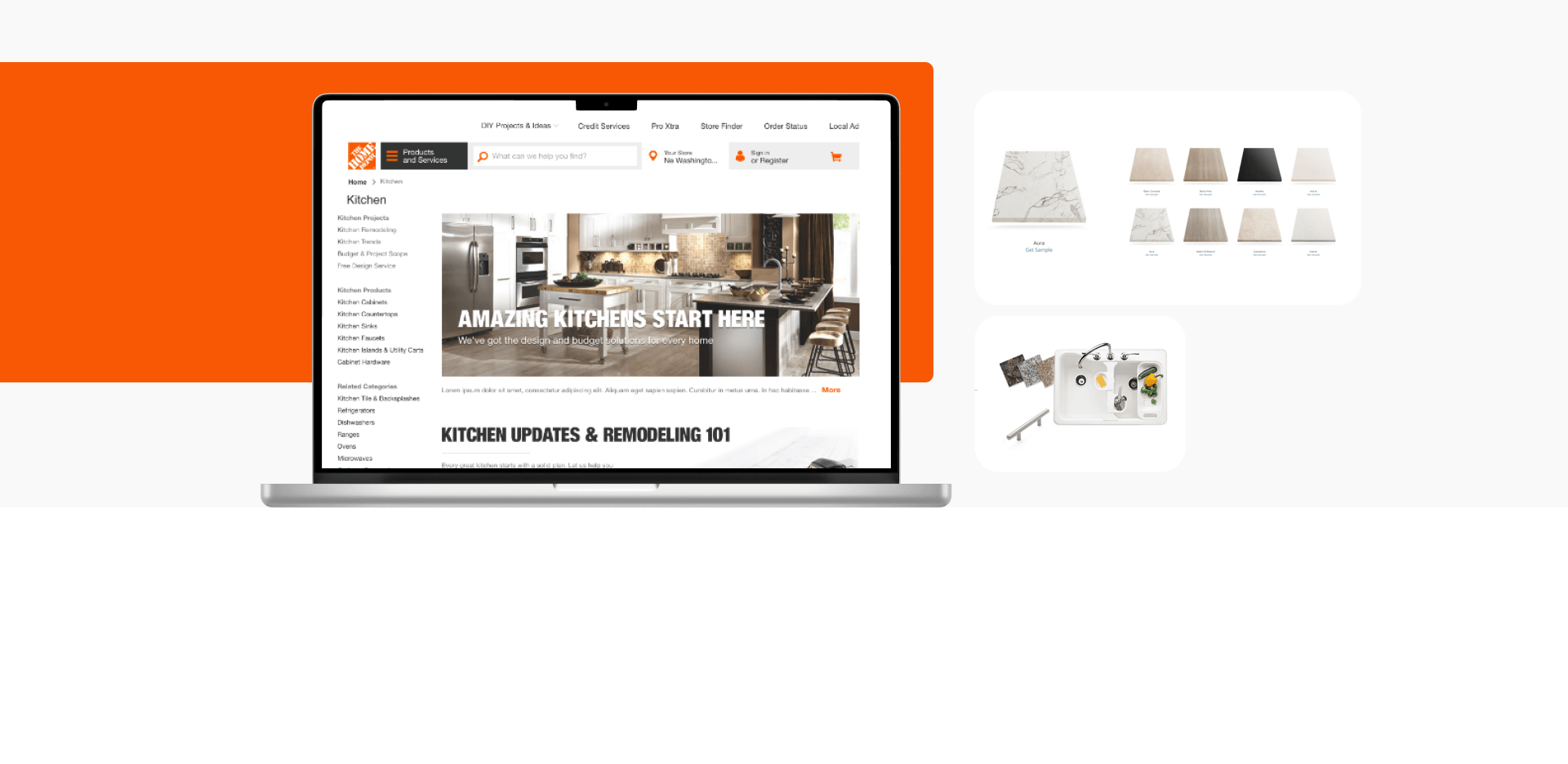
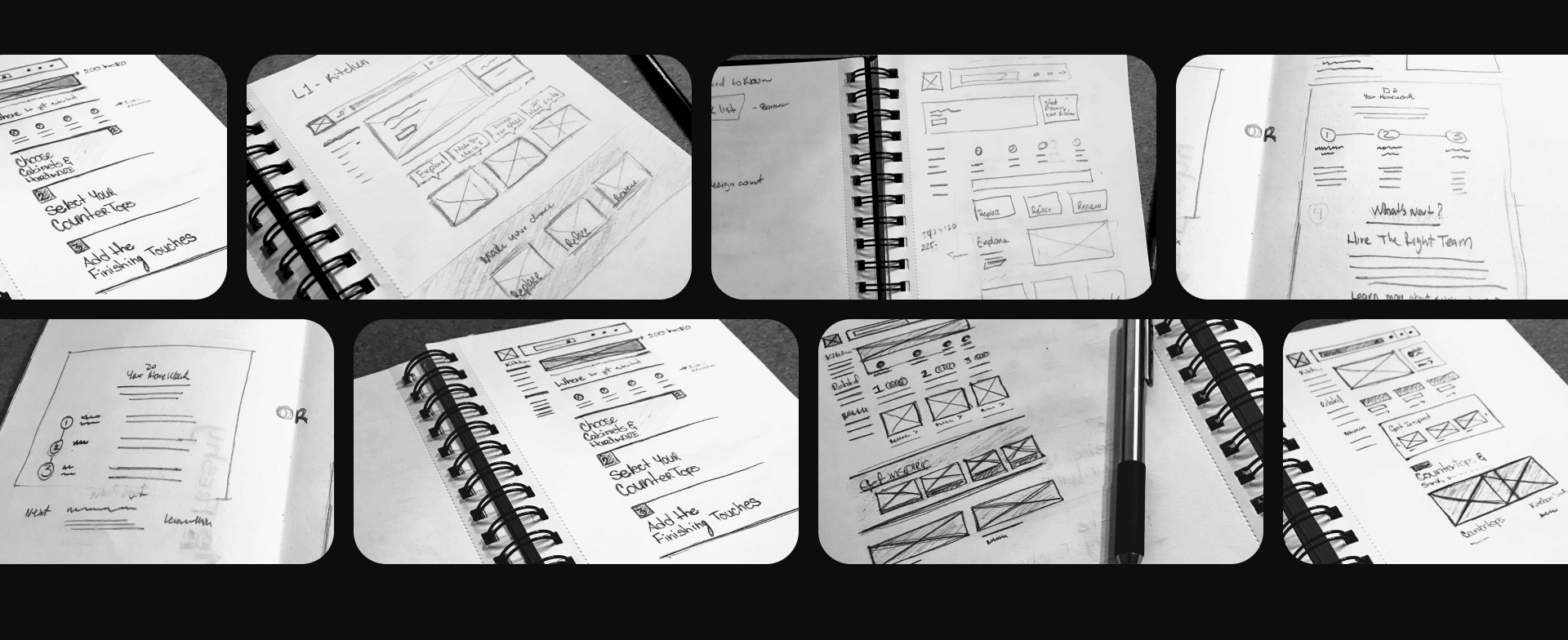
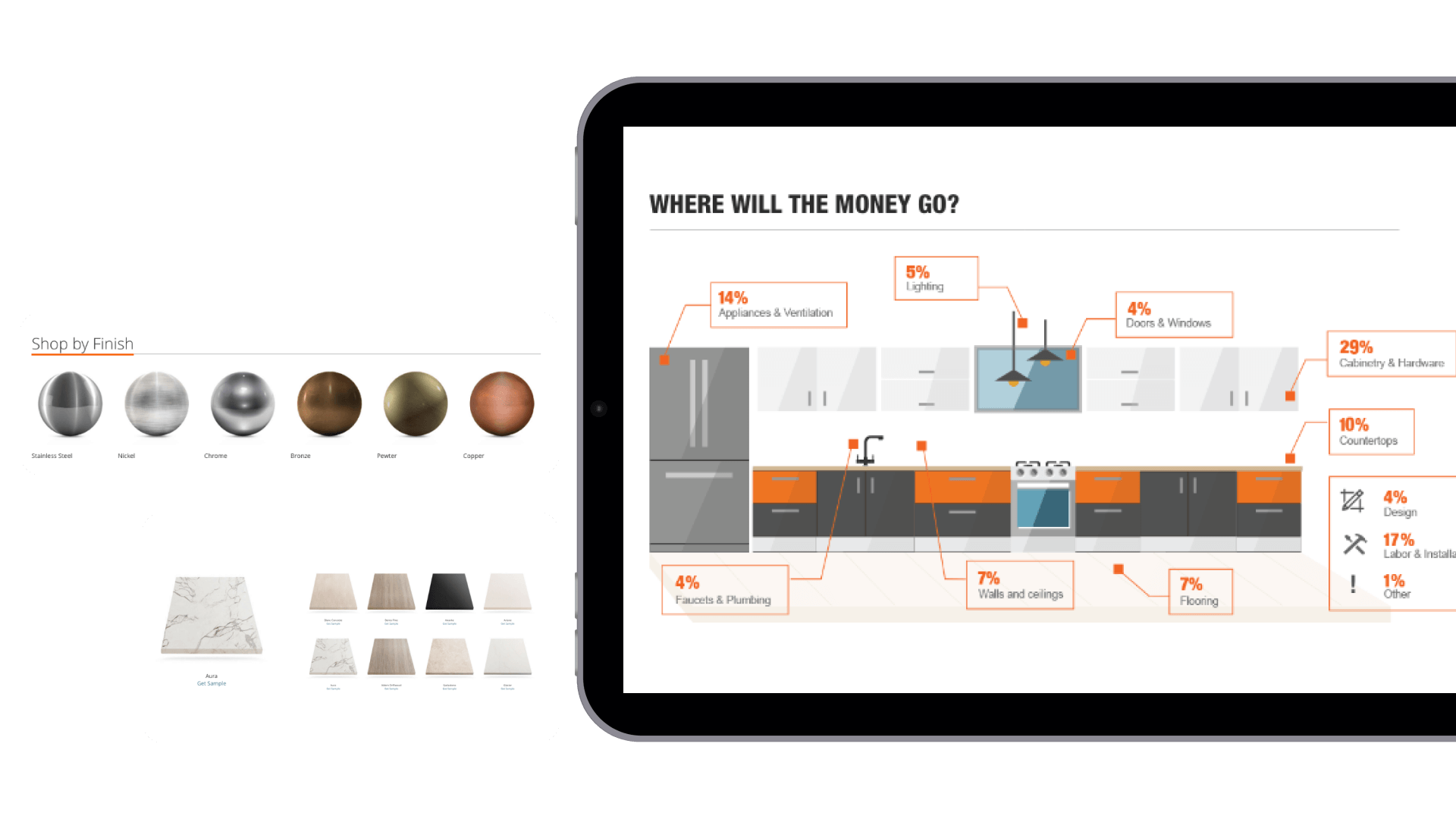
We invested heavily in content-led UX and created a new series of educational modules, including playful infographics, remodel guides, step-by-step journeys, and orientation tools covering: Cabinet types, Layout styles, Budget planning, Materials, Installation timelines, Online vs. in-store assortment differences
These were built into the Kitchen L1 and L2 pages in a way that supported early exploration without interrupting product discovery.
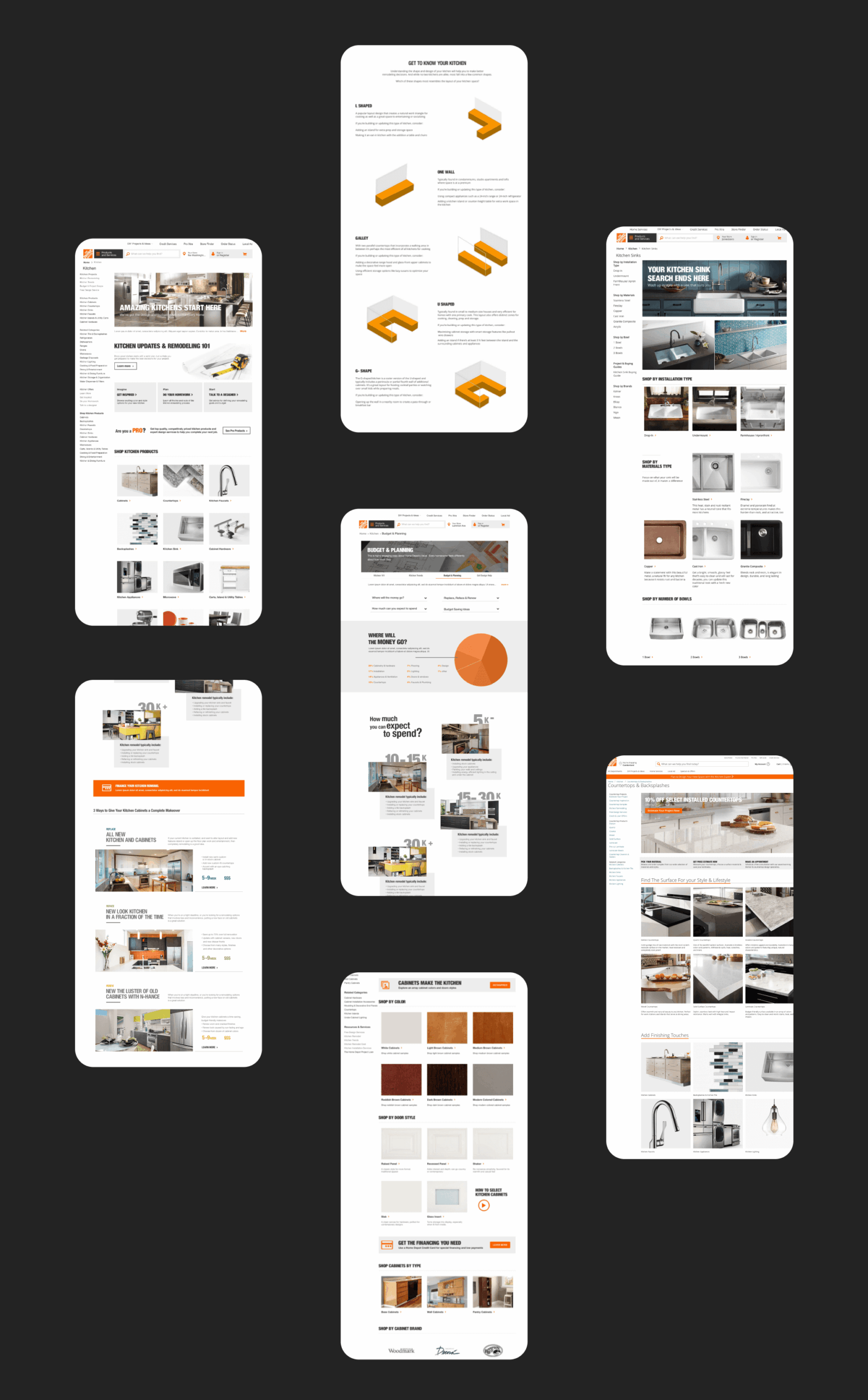
In addition, we restructured the category taxonomy across 10+ pages, including:Kitchen L1 (Overview), Cabinets L2, Kitchen 101 (Basics and terminology), Countertops, Sinks, Renovation guides, Trends & inspiration.
The restructuring ensured customers could navigate the entire category through top shopping considerations, not just product grids.

Online vs. In-Store Journey Alignment
The online experience and store experience were fundamentally different—but they needed to feel connected.
Online, customers encounter:
-
Prefabricated cabinet assortment
-
Research tools
-
Educational content
-
Visual inspiration
-
Digital orientation (L1 → L2 → Guides → Galleries)
In-store, customers receive:
-
Custom cabinetry options
-
1:1 consultations
-
Free design services
-
Access to specialty inventory
Our UX goal was to bridge both experiences, reducing misinformation and preparing customers to enter stores with clarity instead of confusion.
This approach aligned directly with the company’s “One Home Depot” strategy—inspiring confidence across the entire omnichannel journey.
Results
The impact on customer behavior was significant:
-
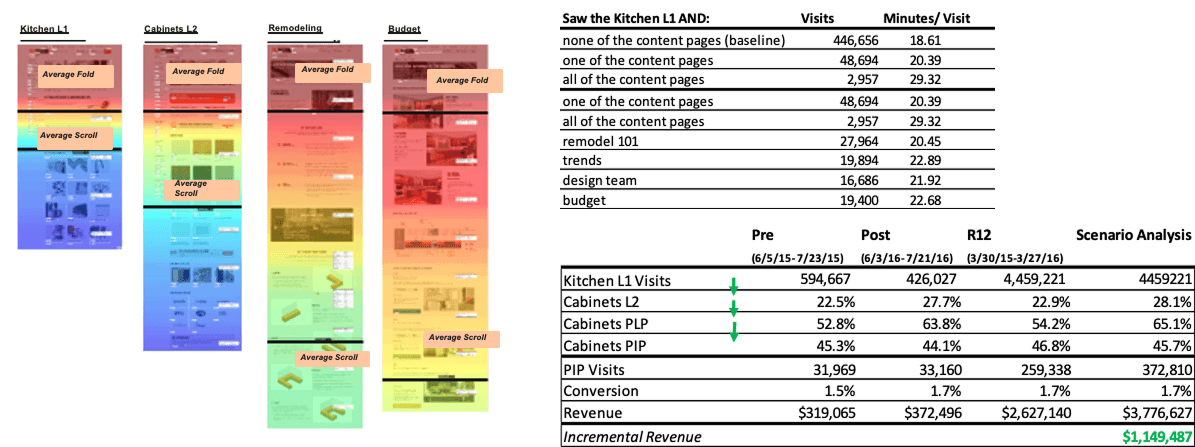
Exit rate decreased
-
Kitchen L1: –30 bps
-
Cabinets L2: –80 bps
-
-
Engagement increased
Users who viewed even one of the new content pages spent ~10% longer (about 2 minutes more) on-site.
Users who viewed multiple new content pages spent ~58% longer, adding over 11 minutes of engagement. -
Content did not cannibalize product browsing
Adding educational content on the L1 still preserved traffic flow into Cabinets L2.
Most importantly, the redesigned experience improved how customers shopped at every stage from early research to final purchase, reducing friction and guiding them toward the right products and services.